Sep 11, 2026
How Medical Distributors Evaluate Chinese Suppliers
How medical distributors evaluate Chinese suppliers: what to check in compliance documentation, factory audits, quality systems, communication, pricing models and delivery reliability before approval.
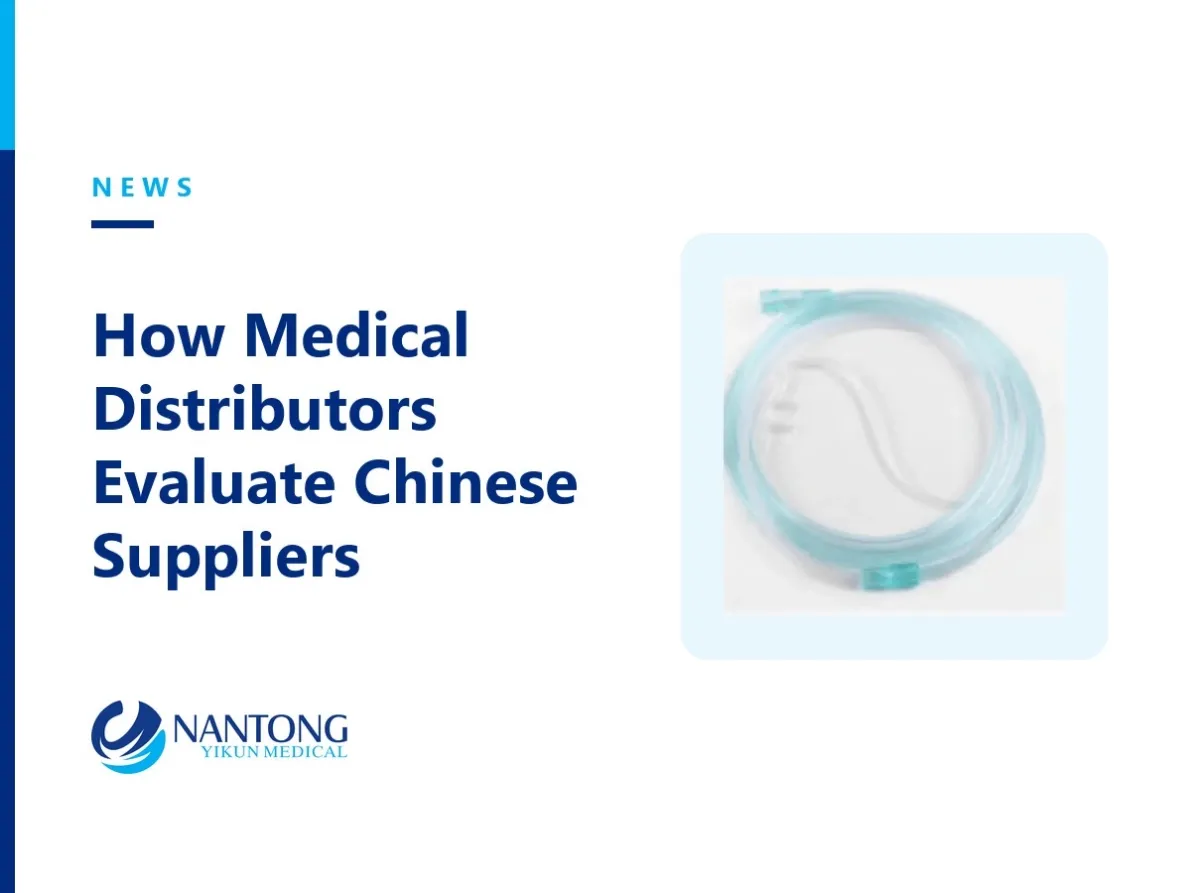
How medical distributors evaluate Chinese suppliers decides whether a sourcing relationship protects a brand or damages it. A distributor that imports syringes, oxygen masks, dressings or catheters under its own name is judged by customers on products it did not manufacture, which makes supplier evaluation a core business process rather than a routine checklist exercise.
Experienced distributors usually work from a supplier scorecard covering compliance, quality, capability, communication, pricing and delivery. Each factor carries a weight, but the gate criteria come first: if a factory fails on documentation or audit results, the price is never discussed.
Documentation is the first gate. The supplier should show its business license, export qualifications and certificates that apply to the specific products, such as ISO 13485, CE marking or FDA documentation. Evaluators check that each certificate matches the factory name, the product type and the destination market, and they ask for supporting documents on request rather than accepting verbal claims.
Quality is examined at factory level. Distributors look for written procedures covering incoming materials, in-process checks, finished-goods testing, handling of non-conforming product and batch traceability, and they expect records proving the procedures are actually followed. Sterilisation validation and batch certificates should be available for review.
An audit provides the strongest evidence. Whether conducted in person, by remote video or through a third-party inspection firm, an audit shows the production floor, warehouse conditions, calibration of test equipment and the factory's plan for handling a defective batch discovered after shipment. A factory that refuses an audit is a factory to avoid.
Capability is assessed against your order rather than against marketing claims. Evaluators ask which machines produce the product, what output capacity the line has, which size ranges are possible and whether the factory has handled comparable export orders before. They also verify whether the factory actually manufactures the product or sources it from another plant.
Communication is a practical test. Export staff should answer technical questions in clear English within a reasonable time and volunteer problems before they become delays. A supplier that disappears during the sampling stage will not become more responsive during production.
Price is evaluated in context. Distributors compare quotations built on identical product, packaging and Incoterms, and they treat prices far below the market as a risk rather than a bargain, because quality and compliance have a cost. Payment terms, MOQ, tooling fees and sampling charges all belong in the commercial comparison.
Delivery reliability is proven with references and small orders. A lead time promise means little until a factory has shipped on schedule twice, so many distributors place a trial order, inspect it and only then award annual volume. Complaint handling, corrective-action reports and documentation support complete the final picture.
- Verify certificates against the product, the factory and the destination market.
- Audit the factory or commission a third-party inspection before approving it.
YIKUN Medical is a China-based manufacturer of disposable medical consumables and welcomes distributor audits, sample requests and documentation checks. Quality control, batch traceability and export paperwork can be confirmed with the sales team before you commit to volume orders.
Related products: oxygen masks at https://www.yikunmed.com/products/oxygen-mask; disposable syringes at https://www.yikunmed.com/products/disposable-syringe
For a quotation, contact the YIKUN Medical team at https://www.yikunmed.com/contact-us.